



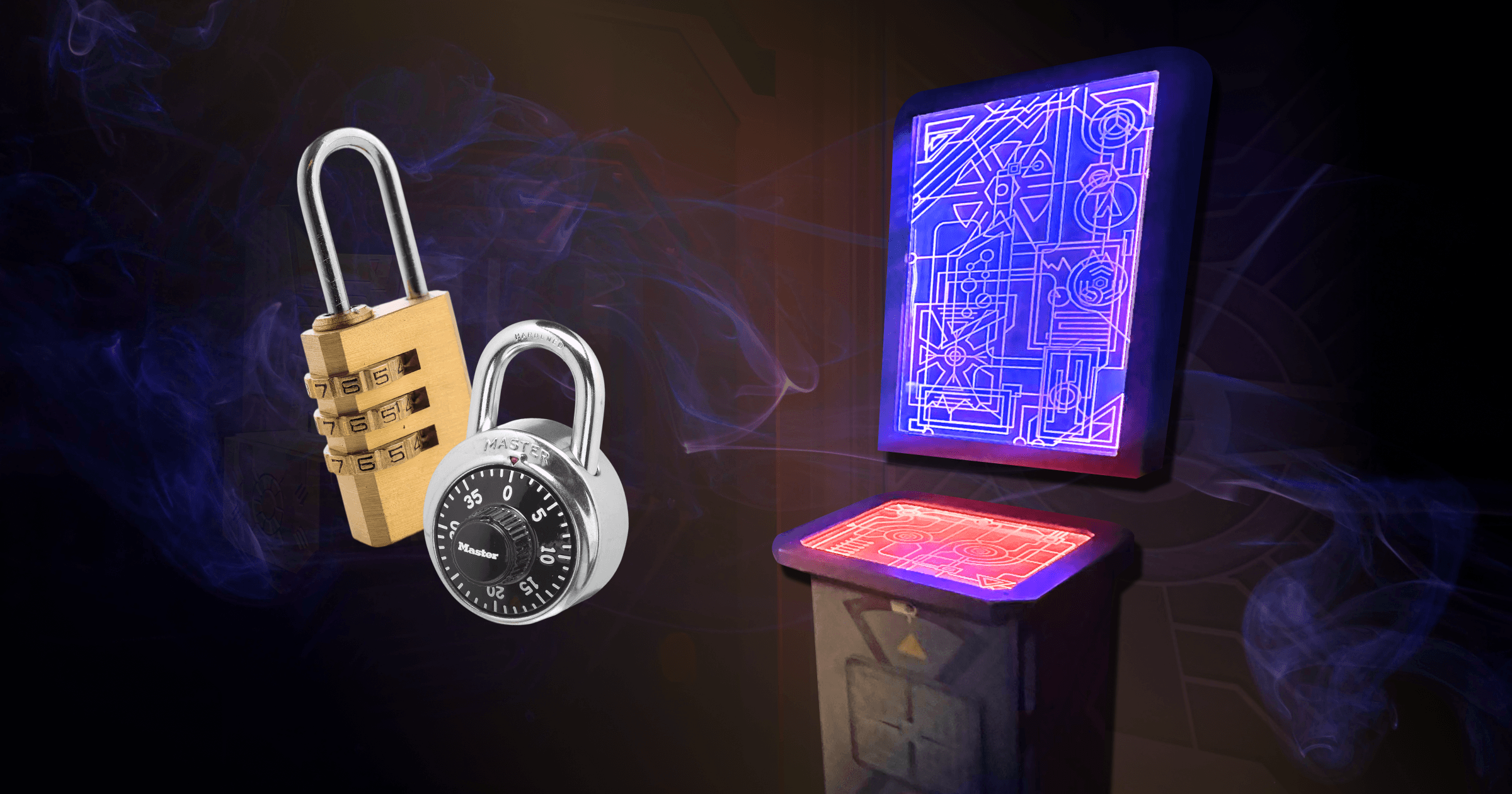
If you played an escape room a decade ago, you probably remember a lot of padlocks, laminated clues, and maybe a bookshelf with a false panel if the owners were feeling fancy. Escape rooms were fun and fresh, but they were also simple: solve puzzles, find keys, and beat the clock.
Fast forward to 2026, and the landscape looks dramatically different. Today’s escape rooms are immersive worlds where lighting, sound, technology, and narrative come together to create theatrical, cinematic experiences. The industry hasn’t just grown, it has transformed.
Whether you're an enthusiast chasing your next challenge or planning your very first visit, here’s a look at how escape rooms have evolved and what innovations are shaping the future of the game.
The Early Era: Padlocks, Paper Clues, and Linear Puzzles
In the early days, escape rooms borrowed heavily from point-and-click computer games and logic puzzles. Rooms often followed a linear structure: solve Puzzle A to unlock Puzzle B. Designers relied on accessible materials, small budgets, and the thrill of novelty.
These rooms were fun because solving puzzles under time pressure taps into the same part of the brain that loves games and mysteries. But the format was limited. As the novelty wore off, players began craving deeper immersion, stronger stories, and more engaging environments — pushing designers toward more ambitious ideas.
The Rise of Immersion: Storytelling Becomes the Star
As escape rooms gained popularity, players wanted more than puzzles they wanted worlds to step into.
By the early 2020s, escape room design shifted toward narrative-driven experiences. Games began with cinematic introductions, characters players interacted with, and missions that felt more purposeful than simply “escape before time runs out.”
Owners invested in detailed set design, special effects, and themed environments that felt closer to movie sets than game spaces. Suddenly, players weren’t just solving riddles — they were defusing bombs, escaping ancient temples, restoring broken timelines, or uncovering magical secrets.
The Tech Boom: Automation and High-Tech Puzzles
One of the most dramatic leaps in escape room evolution came with technology.
Magnetic locks, RFID sensors, pressure pads, motion-based triggers, and responsive lighting began replacing traditional padlocks. Rooms became more dynamic and surprising. Player actions triggered sound cues, hidden compartments opened automatically, and puzzles unfolded in non-linear ways.
By 2024 and 2025, many escape rooms were integrating technology more seamlessly into puzzle design using it to enhance immersion rather than replace thoughtful gameplay. The result was a more fluid, cinematic experience that still rewarded logic, observation, and teamwork.
What’s New in 2026: Trends Reshaping Modern Escape Rooms
The evolution continues. In 2026, several design trends are pushing escape rooms into new territory while refining what players value most.
1. Non-Linear Gameplay and Parallel Puzzle Design
Early escape rooms often forced teams to wait on one puzzle before progressing. Modern rooms increasingly allow players to work on multiple puzzles at the same time.
At Mythical Escapes and other forward-thinking venues, non-linear design keeps everyone engaged throughout the experience. Teams can split up, collaborate, and communicate as they uncover puzzles in different areas of the room. This approach reduces bottlenecks, keeps energy high, and emphasizes teamwork, even though the overall mission remains consistent from one visit to the next.
2. Live Game Masters and Player-Controlled Difficulty
While technology plays an important role, one of the most valuable elements of today’s escape rooms remains human: the live game master.
Rather than relying on AI or automated difficulty systems, Mythical Escapes uses experienced game masters who monitor each game in real time. Teams control their own challenge level by choosing how many hints they request. Want a tougher experience? Ask for fewer hints. Need a nudge to keep things moving? Help is always available.
This approach ensures escape rooms stay welcoming for first-timers while remaining satisfying and challenging for experienced players.
3. Hybrid Physical-Digital Experiences
Virtual and augmented reality are no longer separate categories they’re being thoughtfully integrated into physical escape rooms.
In 2026, players might interact with physical objects that trigger digital effects, uncover augmented elements layered onto real-world sets, or use screens and projections as part of the storytelling. The key is balance. Players still search, touch, move, and solve, technology simply deepens the immersion.
4. Cinematic Set Pieces and Full-Scale Transformations
Modern escape rooms lean heavily into dramatic reveals.
Walls slide open. Hidden rooms appear. Lighting and sound shift instantly based on player actions, transforming the atmosphere mid-game. These cinematic moments blur the line between escape room and immersive theater, making each experience feel bigger, bolder, and more memorable.
5. Puzzle Design Rooted in Real Skills
Today’s best escape rooms emphasize puzzles that rely on real-world skills: communication, observation, logic, memory, and spatial reasoning.
Instead of arbitrary codes or guesswork, modern puzzles feel intuitive and rewarding. Players succeed by working together, paying attention to their surroundings, and thinking creatively — not by brute-force trial and error.
Why This Evolution Matters for Players
The transformation of escape rooms has expanded their appeal far beyond niche puzzle enthusiasts.
Modern escape rooms attract:
-
Families looking for meaningful shared experiences
-
Corporate teams focused on communication and problem-solving
-
Gamers craving immersive challenges
-
Couples and friends wanting something more memorable than dinner and a movie
-
First-timers who feel intrigued by interactive storytelling rather than intimidated by “hard puzzles”
Escape rooms have become a form of experiential entertainment, blending play, story, and collaboration into one unforgettable hour.
The Future of Escape Rooms at Mythical Escapes
At Mythical Escapes, we’ve always believed escape rooms should feel magical. Technology should support the story, not overshadow it. Puzzles should feel rewarding, not frustrating. And every group should leave feeling like they truly stepped into another world.
As the industry continues to evolve, we remain focused on crafting immersive, story-driven experiences that balance creativity, challenge, and fun, the hallmarks of modern escape room design.
Whether you’re brand new or a seasoned escape room veteran, 2026 is shaping up to be one of the most exciting years yet!
Ready to see how far escape rooms have come? Explore our rooms and book your next adventure at Mythical Escapes: https://mythicalescapes.com/