

Walk into any escape room and within five minutes, you'll know exactly who everyone is at the office.
Escape rooms are more than a fun way to spend a Friday evening - they're an accidental personality test. Strip away job titles and Slack handles, put a team in a locked room with a 60-minute clock, and the real dynamics surface fast. Who takes charge? Who goes quiet and thinks? Who finds the clue everyone else missed? Sound familiar? That's because escape rooms and workplaces run on the same engine: people, pressure, and the need to solve problems together.
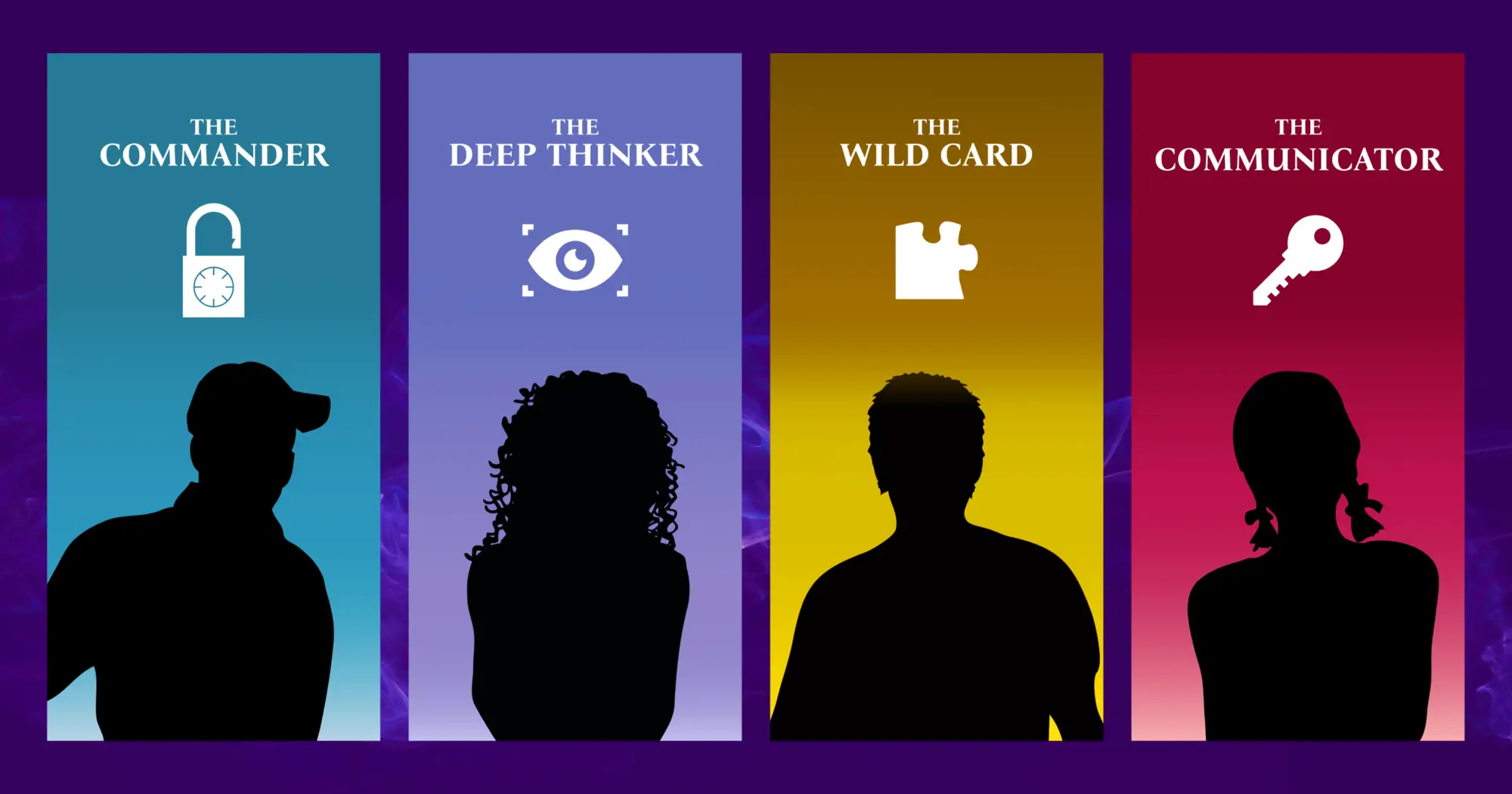
The Commander: First to the Whiteboard
This person walks in and immediately starts delegating. "You check the left side, I'll take the right, someone watch the clock." They thrive under pressure and hate wasted motion. In the office, they're the project manager who has a plan before the kickoff meeting ends. Their superpower is momentum but the best Commanders know when to listen, because the puzzle-solver quietly in the corner might have the answer they're sprinting past.
The Deep Thinker: Slow Down to Speed Up
While others are flipping over furniture, the Deep Thinker is standing still, studying the room. They notice the small things — a date etched on a frame, a symbol that appears twice, a lock that doesn't quite match. At work, this is the analyst, the strategist, the person whose "wait, what if…" saves the team from a costly mistake. They don't need to be the loudest voice in the room. They just need to be heard.
The Communicator: The Glue of the Group
This person is constantly narrating. "I found a key — does it match anything you have? What does the number on the wall mean? Has anyone tried the combination 4-7-2?" They're not just sharing information — they're making sure nothing gets siloed. In the workplace, Communicators are the teammates who write the meeting recap, flag when two people are duplicating effort, and keep the energy from flatlining. Teams that communicate well escape faster. Teams at work that communicate well perform better. The data on both is pretty clear.
The Wild Card: Unconventional and Occasionally Brilliant
Nobody expected them to try that. Nobody thought it would work. And yet — the door opened. Wild Cards bring creative instincts that don't follow the rulebook, which can be frustrating until it's exactly what's needed. At work, they're the ones who reframe a stale problem or pitch an idea the team initially rolls their eyes at. Great teams don't suppress their Wild Cards. They channel them.
The Real Takeaway
The best escape room teams ( like the best work teams) aren't made up of one personality type. They're made up of people who know their role, trust each other, and adapt when the pressure spikes. The difference is that in an escape room, you get to experience all of that in 60 minutes, with zero stakes and a lot of laughs!
Ready to find out which one you are? Book today: https://mythicalescapes.com/booking!